Cinnabon
- 4.8
- Rating
- 100.00K
- Installs
- Free
- Price

 Analysis by App-foxy
When I want a Cinnabon treat without turning the visit into a long stop, I find the Cinnabon app most useful as a small ordering and rewards companion rather than a complete food-discovery tool. It is free, aimed at everyone, and built around a simple idea: make it easier to order from Cinnabon and keep track of sweet rewards. That focus is both its main strength and its biggest boundary.
I tested it with the mindset I would use before recommending it to a friend: does it save time, does it make repeat visits more worthwhile, and does it work better than simply walking up to the counter or using a broader delivery service? My answer is yes in the right situation, especially if Cinnabon is already one of your regular stops. If you only visit occasionally, the benefit is less immediate, and the extra app may not earn a permanent place on your phone.
What to consider before installing it
The first decision is how often you buy from Cinnabon. The app is not trying to be a general restaurant marketplace. It is a focused Food & Drink app from Cinnabon Franchisor SPV LLC, so its value depends heavily on whether you want a direct connection to this particular brand. For a regular customer, having ordering and rewards in one place is convenient. For someone comparing many restaurants, a broader service may be more practical.
You May Also Like

 Blood Strike: 2.5 Anniversary
Blood Strike’s Loadouts Turn Every Drop Into a Tactical Gamble
A close look at Blood Strike’s custom loadouts: how fast access to signature weapons reshapes its battle royale rhythm, rewards preparation, and narrows the gap between fights.

 Pandora - Music & Podcasts
Pandora’s Music Is Easy to Start, but Harder to Recover
Pandora’s strength is its low-effort path from a seed to a station. Its weak spot is how much confidence it asks you to place in connection, setup, and quiet recovery.

 8 Ball Pool
 Is Built on Rivalries, Rematches, and Routine
A close look at the rivalries, rematches, shared routines, and unanswered safety questions that turn a quick pool match into a persistent mobile community.

 Samsung Music
’s Quiet Strength Is Playing What You Already Own
Its reach comes less from spectacle than from dependable access to a personal library. That simplicity is both the app’s strongest retention engine and its ceiling.

 AccuWeather: Weather Radar
AccuWeather Review: A Quick, Clear Forecast for Everyday Decisions
For everyday plans, the best forecast is the one you can understand quickly. AccuWeather makes rain timing, radar, and local conditions easy to act on, with a few trade-offs.

 Hill Climb Racing
Why Hill Climb Racing Still Turns Crashes Into One More Run
A tiny car, a bumpy hill and one more upgrade: Hill Climb Racing keeps resurfacing because its simple chaos makes every near-miss feel personal.
More From Our News Desk
View All News


The second question is whether you prefer planning ahead or choosing at the counter. A dedicated ordering app makes the most sense when I already know what I want, when I am picking something up on a schedule, or when I am ordering for more than one person. It is less compelling when I am browsing casually, asking staff about the freshest option, or deciding between several nearby businesses.
There is also a useful distinction between convenience and savings. The app’s store summary centers on ordering and earning sweet rewards, but I would not install it solely because I expect every purchase to become dramatically cheaper. Rewards are most valuable when they fit naturally into visits I was already going to make. If an app encourages unnecessary impulse orders just to reach a benefit, the convenience can quickly become false economy.
On iPhone, the listed minimum operating-system requirement is iOS 11, which keeps the technical entry point relatively accessible for compatible devices. The current version is 2.6. I would still check that the app opens properly on your phone before relying on it for a time-sensitive pickup, particularly if you use an older device or rarely update applications.
Its audience is broad because the content rating is Everyone, and the app is free to install. That makes the initial decision easy: there is no purchase required just to try the ordering experience. The more important cost is attention. You need to maintain one more app, remember where its rewards live, and use it often enough for its purpose to outweigh that small amount of digital clutter.
The everyday situation where it makes the most sense
Imagine that I am leaving work with a short break before heading home. I want a Cinnabon order for myself and another person, but I do not want to spend that break waiting while everyone decides at the counter. I can use the app to make the order before arriving, then treat the visit as a quick pickup rather than a full ordering stop. That is a practical improvement, even if the app does nothing more complicated than organize the transaction.
The same workflow can help when I am bringing treats to a small meeting or family gathering. The important advantage is not just speed; it is reducing the chance that I will forget part of the order while speaking over a busy counter. I can review the selection before submitting it and keep the purchase tied to the rewards side of the experience. For a planned stop, that combination feels more useful than opening a general delivery app and searching from scratch.
My tip is to decide the order before opening the app. If I use it while hungry and undecided, I spend more time browsing and may end up treating it like an entertainment feed. If I already know the occasion, the number of people, and whether I need pickup or another available ordering route, the app becomes a tool instead of a distraction.
How ordering feels in practical use
The ordering experience is at its best when the customer already understands the Cinnabon menu and wants a direct route to purchase. A dedicated brand app can remove the need to search through unrelated restaurants, promotions, or cuisine categories. That narrower scope is helpful when the destination is already chosen.
It also creates a clearer mental separation between an order from Cinnabon and an order placed through a third-party marketplace. I prefer that when I want the brand’s own experience and do not need to compare several restaurants at once. The trade-off is that I lose the convenience of having multiple merchants in one basket or one familiar delivery interface. This is a brand-specific tool, not a universal ordering dashboard.
Before relying on it for a strict schedule, I would open the app early enough to confirm the location and ordering path available for the visit. Store availability can affect what a user can actually do, and a good habit is to avoid waiting until the last minute to discover that the preferred option does not suit the current stop. That is not a criticism unique to Cinnabon; it is simply the practical cost of using a location-based ordering app.
Another small but important habit is to review the final order carefully before completing it. Treats are often purchased in groups, and a mistake in quantity or selection is more annoying when everyone is expecting something specific. I find that a quick final check is worthwhile, especially when ordering for children or coworkers who have different preferences.
Rewards are most useful for planned repeat visits
The rewards element gives the app a reason to remain installed after the first order. A one-time ordering shortcut can be replaced by a browser visit or a counter interaction, but a rewards history gives regular customers a reason to return to the same channel. In my experience, the best way to use this kind of feature is to let it follow normal buying habits rather than changing those habits.
For example, if I already buy a treat during a monthly shopping trip, I would use the app consistently for those planned visits and watch how the rewards accumulate. I would not make an extra trip simply because I was close to a reward unless the purchase genuinely suited me. This approach keeps the benefit from becoming an excuse to spend more than intended.
A less obvious advantage is consistency. When I order through the same place, I am less likely to forget whether a purchase was connected to my rewards activity. That matters more to me than a flashy promotion because it reduces the mental work around repeat visits. The app is strongest when it becomes a routine part of an existing Cinnabon habit.
At the same time, rewards can feel less valuable to people who spread their purchases across many bakeries, cafés, and snack brands. A general loyalty wallet or a broader food service may fit that lifestyle better. The dedicated app rewards commitment to Cinnabon, so occasional visitors should judge it by convenience rather than assuming the loyalty side will transform their buying pattern.
Where Cinnabon’s app wins over usual alternatives
Compared with ordering in person, the app can win on preparation. I can make decisions away from a crowded counter, check the order before leaving, and arrive with a clearer plan. That is especially useful during a short break, when I am coordinating a small group, or when I dislike making food decisions under pressure.
Compared with a broad delivery platform, it wins through focus. I do not have to search through unrelated listings when I have already chosen Cinnabon. The direct route can feel cleaner, and the rewards purpose is more closely connected to the brand instead of being mixed into a marketplace full of other restaurants.
Compared with simply saving a website shortcut, the app has a stronger reason to be used repeatedly because ordering and rewards are presented as one ongoing relationship. I value that when I visit often. The advantage is not that the app replaces every other method; it is that it makes the Cinnabon-specific method easier to repeat.
Its rating also suggests that many customers find the experience worthwhile: it holds a 4.7 average from around 1.4 thousand ratings, with around 391 written reviews. I treat that as encouraging rather than conclusive. Ratings can confirm that the app has a satisfied audience, but they cannot decide whether it fits my own habits. A person who rarely buys from Cinnabon may have a completely different experience of its value.
Where another option may fit better
I would choose a broader ordering service when I am comparing Cinnabon with nearby alternatives, ordering several types of food together, or trying to coordinate a larger meal. The dedicated app is not designed to replace that wider search. Its narrow focus is helpful after I have made the brand decision, not before.
I would also use the counter when I need a conversation. If I have a detailed question about an item, want help deciding, or need to explain a special situation, direct staff interaction may be more comfortable than working through an app. The digital route is efficient for clear orders; it is not automatically better for every unusual request.
There is a similar trade-off with delivery. If convenience means having food brought from several places, a marketplace is likely the better tool. If convenience means arranging a known Cinnabon order and keeping the purchase connected to the brand’s rewards experience, this app has the clearer purpose. The right choice depends on whether I value breadth or directness for that particular occasion.
I would skip installing it if I am only visiting once, have very limited phone storage, or dislike maintaining separate brand apps. The fact that it is free removes the financial barrier, but not the organizational one. A phone full of single-purpose apps can make everyday tasks harder, not easier. In that case, ordering in person may be the more sensible choice.
The real cost of switching to a dedicated app
Switching from the counter to the app is not difficult, but it does require a new routine. I have to remember to open the correct application, choose the intended location, build the order carefully, and make sure the purchase is connected to the account or rewards flow when appropriate. Those steps are minor, yet they matter when I am in a hurry.
The first few uses are also when I decide whether the app genuinely saves time. If I already know my order, the process should feel more organized than waiting and deciding on location. If I am still learning the menu or trying to solve an unusual request, the app may take longer than a quick conversation. I would judge it after several normal visits rather than after one exploratory session.
My practical approach would be to install it before the next planned Cinnabon visit, not while standing outside with a group waiting. I would sign in, look through the ordering flow, and understand where rewards are handled. That preparation turns the first real use into a test of convenience instead of a rushed setup exercise.
There is also a behavioral cost worth noticing. A rewards app can make repeat purchases feel more urgent because progress is visible. I recommend setting a simple personal rule: use the app to record purchases I already want, not to justify purchases I would otherwise skip. That keeps the loyalty feature helpful without letting it dictate my spending.
The audience size gives the app some reassurance as well. It has passed 100 thousand installs, which means it is not an obscure experiment with no established user base. I still would not treat popularity as a guarantee of perfect performance on every phone or at every location. It is better understood as a sign that the app has a meaningful role for Cinnabon customers.
What I would check before a time-sensitive order
My first check would be the selected location. A familiar brand does not mean every branch is equally convenient for the route I am taking, and choosing the wrong store can defeat the purpose of ordering ahead. I would confirm the destination before spending time customizing the order.
Next, I would check the timing I actually need. If I am catching a train, returning to work, or meeting someone who is already waiting, I would leave a little room for the visit itself rather than assuming the app removes every delay. Ordering digitally can reduce counter time, but it does not erase travel, store traffic, or the need to collect the purchase.
Finally, I would review the rewards status after completing the order when it matters to me. Keeping an eye on that step helps avoid disappointment later and makes the app’s loyalty function easier to trust. This is one of the reasons I prefer using a dedicated app consistently instead of alternating randomly between the app, a marketplace, and the counter.
Version, audience, and long-term usefulness
The app was released on May 11, 2021, and its current version is 2.6. I see that history as a sign of an established product rather than a brand-new ordering experiment. Still, the most important test is whether the current experience matches my routine today. A release date can provide context, but it does not replace actually checking how smoothly the app fits a present-day visit.
Because it is rated for Everyone, it can suit a household where different people help place orders. That does not mean every family member will prefer using it. Some may appreciate preparing an order on a phone, while others may find the counter faster. I would let each person use the method that feels clearest, especially when the order is simple.
The developer, Cinnabon Franchisor SPV LLC, has kept the app’s purpose tightly tied to the brand. That focus is reassuring for customers who want a Cinnabon-specific tool, but it also explains why I would not recommend it as a general food app. It is useful because it is specialized, and limited for exactly the same reason.
For me, long-term usefulness comes from three habits: using it for planned repeat visits, checking the location before ordering, and treating rewards as a bonus rather than a spending target. Those habits expose the app’s genuine strengths while reducing the frustration caused by rushed or unnecessary orders.
My recommendation for different kinds of customers
I recommend trying it if Cinnabon is a regular treat, if you often order ahead, or if you want a more consistent way to connect purchases with sweet rewards. The free installation makes experimentation low-risk, and the app’s focused design is easier to justify when the brand is already part of your routine.
I would recommend the counter instead for a one-off visit, a quick uncomplicated purchase, or a situation where you need to ask staff something directly. There is no reason to add an app for a single cinnamon-roll stop if the digital process will take longer than the purchase itself.
I would recommend a broader marketplace when variety matters more than loyalty. If I am deciding among several restaurants, combining different cuisines, or arranging a larger delivery, Cinnabon’s dedicated app is not the natural starting point. It is a destination tool, not a restaurant comparison engine.
Overall, I see Cinnabon as a focused companion for repeat customers rather than an essential app for everyone. Its strongest case is simple: I already want Cinnabon, I prefer to prepare the order before arriving, and I value keeping rewards attached to those purchases. When those conditions apply, the app earns its space and can make a familiar treat feel more organized.
If those conditions do not apply, I would skip it without hesitation. The app does not need to replace the counter or every other food service to be good. It only needs to make the direct Cinnabon routine easier, and in that specific role, I find Cinnabon worth trying.
FAQs for Cinnabon
01What is the Cinnabon app used for?
The Cinnabon app is designed to help fans discover nearby bakeries, browse available cinnamon rolls, baked goods, drinks, and other menu items, and find current promotions. Depending on your location, it may also support ordering for pickup or delivery. Features can vary by region, so it is worth checking whether your local bakery is included before downloading.
02Can I order Cinnabon products through the app?
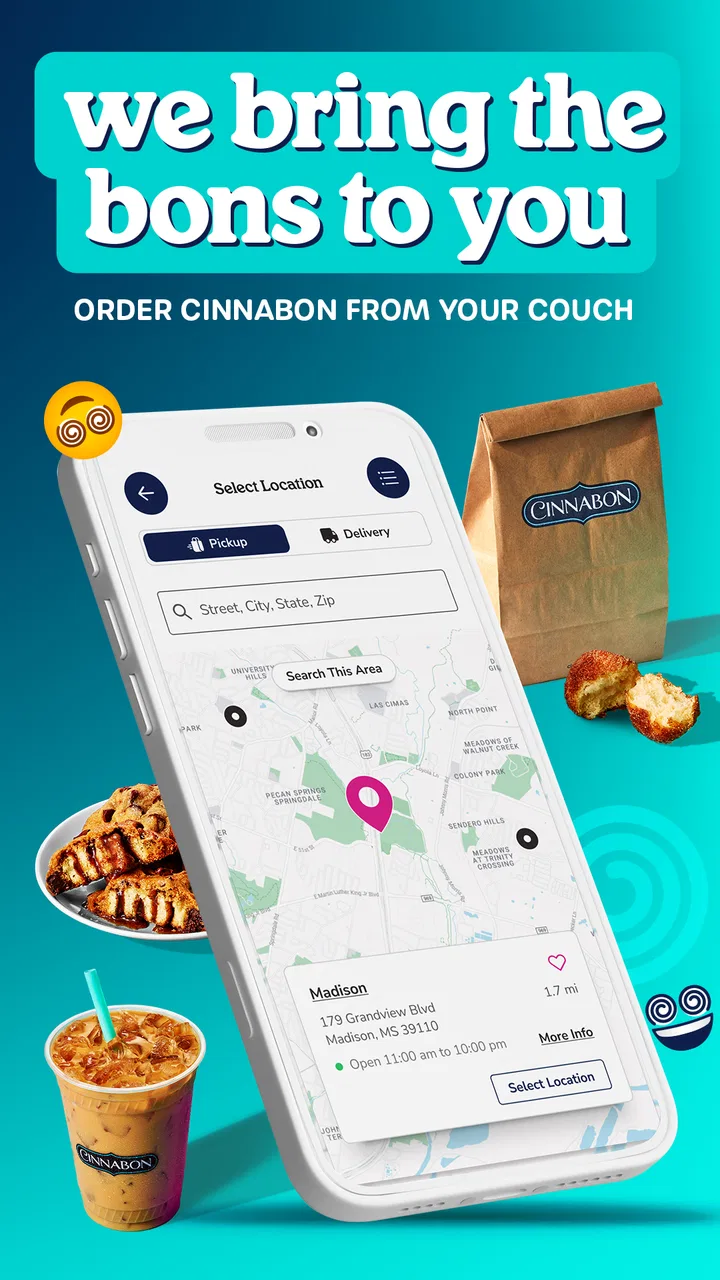
In supported locations, the app may allow you to place an order for pickup or delivery by selecting a participating bakery, choosing items, and completing payment. Availability is not identical everywhere, because ordering options depend on the local store, operating hours, delivery partners, and regional services. Always confirm the selected location and estimated preparation time before submitting an order.
03Does the Cinnabon app offer rewards, coupons, or special promotions?
Cinnabon may provide digital offers, promotional deals, or rewards through its app and connected loyalty features. The exact benefits can change over time and may differ between countries or participating bakeries. Some coupons have expiration dates, minimum purchase requirements, or restrictions on specific menu items. Read the terms shown in the app before relying on an offer.
04Is the Cinnabon app free to download and use?
The Cinnabon app is generally free to download from the official Android or iOS store, and browsing menus or locations normally does not require a purchase. However, the cost of any food, delivery charge, service fee, tax, or optional tip is separate. Before confirming an order, review the complete total carefully, since fees may vary by location and order method.
05What should I know about privacy and account requirements?
Some Cinnabon features may work without an account, such as viewing general information or locating bakeries, while ordering, saving preferences, or using loyalty benefits may require registration. The app can request information such as your name, email address, phone number, location, and payment details when relevant. Review the app’s privacy policy and permissions before creating an account or placing an order.
Pros
- Easy to browse classic rolls
- bites
- drinks
- and seasonal treats.
- Store locator helps users find nearby Cinnabon bakeries quickly.
- Menu photos make it easier to choose before visiting.
- Useful for checking product availability and bakery information.
- Simple interface keeps ordering and browsing straightforward.
Cons
- Mobile ordering may not be available at every Cinnabon location.
- Prices
- promotions
- and menu items can vary by store.
- Some app features may require location access to work properly.
- High-calorie treats may not suit users seeking healthier options.
- Limited customization may be available for certain menu items.

Cinnabon
Gallery